

On this page
Ask most enterprises how long a dealer incentive platform takes to build, and the answer is usually six to nine months. Mobile apps, a back office, approvals, payouts, integrations, audit trails: it adds up.
We built Ostwal Group's incentive management platform, every module, in 22 days from ideation to production. In this article we follow one fertiliser sale through the system, from the moment a wholesaler registers to the moment their incentive is paid, and show how our AI-Driven Development Life Cycle made that timeline safe.
The six-month problem
Ostwal runs a retailer and wholesaler incentive scheme on fertiliser sales across several states. Before the platform, keeping it running meant spreadsheets, phone calls and manual reconciliation:
- Matching POS sales data to the right retailer.
- Applying scheme slabs month by month.
- Getting approvals from Relationship Managers and Zonal Officers.
- Paying out accurately, and proving it later.
The goal was one platform where partners register themselves, sales flow in automatically, incentives calculate themselves, approvals move without chasing, and every rupee paid can be traced.
Step 1: Partners onboard themselves
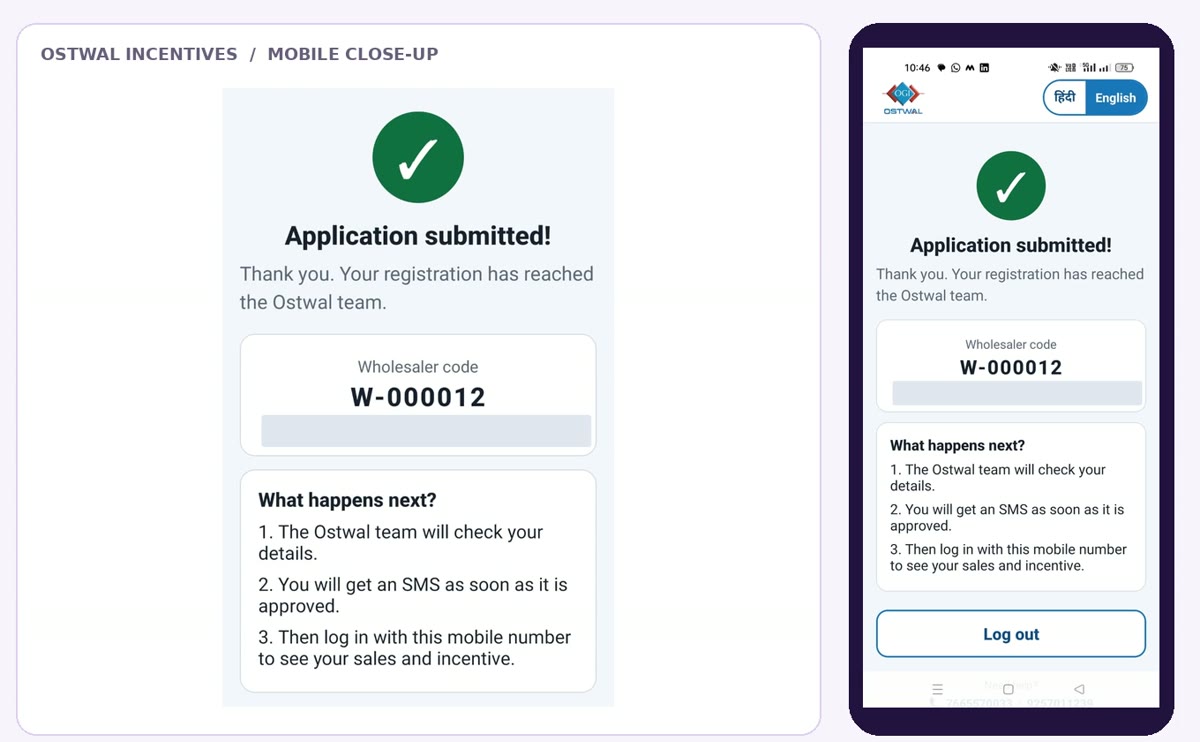
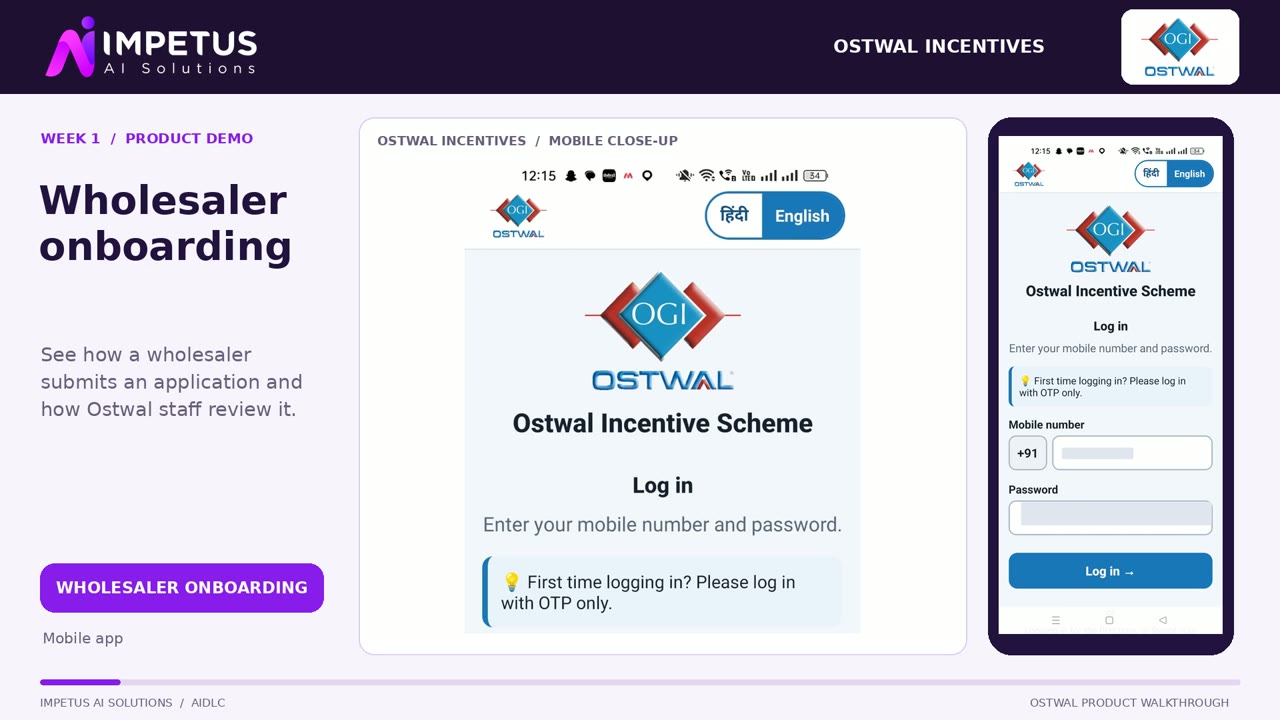
It starts on a phone. A wholesaler opens the bilingual Hindi and English app, chooses Wholesaler registration and enters their POS ID and mobile number. The app shows exactly where to find the ID on the POS machine, so nobody has to call a field officer to ask.
They add their fertiliser sales licence and a photo or PDF of it, then their firm, address and contact details. PAN, GST and bank details with a cancelled cheque are optional, so a partner can register now and complete payment details later. After a final review, the app confirms the application and shows a wholesaler code.
On the other side, Ostwal staff open the same record in the web console, check the licence, compare the bank details with the cheque and approve. Duplicate mobiles, licences and POS ID clashes are blocked or flagged automatically.
Watch the wholesaler onboarding walkthrough
Step 2: Sales flow in, and nothing is guessed
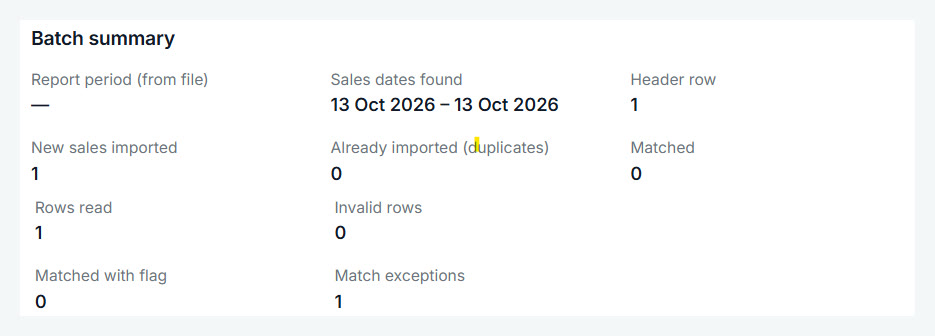
Every day, staff upload the POS sales report as an Excel file. Before anything is saved, the platform previews the file, detects the sales dates and validates each row. Duplicates are caught, so the same sale can never be counted twice.
Each sale is then matched to the right retailer or wholesaler account. This is where most manual processes go wrong, so we made a deliberate choice: anything ambiguous goes to an Exceptions queue for a person to resolve, rather than being guessed.
Step 3: Schemes become rules, not spreadsheets
Incentive schemes used to live in spreadsheets and emails. In the platform, an administrator configures each scheme in one place: the offer period, the sales slabs and rates, which products are eligible or excluded, and whether it applies to retailers or wholesalers.
Some conditions can't be checked from POS data, so a scheme can list conditions the Relationship Manager must confirm each month. If one isn't met, the incentive goes on hold rather than through.
Before publishing, staff can try the scheme with sample sales figures using the same calculation the server uses, and preview the offer in Hindi exactly as it will appear on the partner poster. Every published scheme is versioned, so it's always clear which rules applied to which month.
Step 4: Incentives calculate, people approve
At month end, staff pick the month and the schemes, and the platform calculates every incentive. Sales from all of an account's registered POS IDs and mobiles are added together before the slab is applied, so partners with several machines are treated fairly.
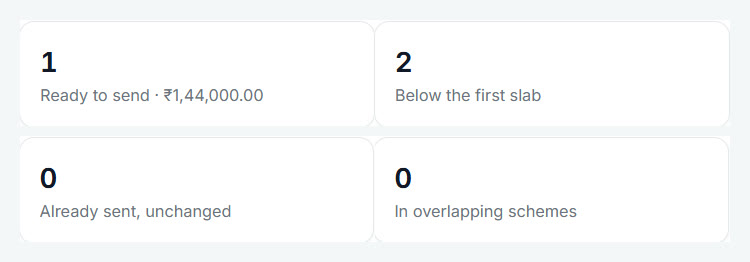
Nothing is paid straight from a calculation. Eligible amounts go through an approval chain of Relationship Manager, Zonal Officer and Admin, and each person can hold a payment with a reason.
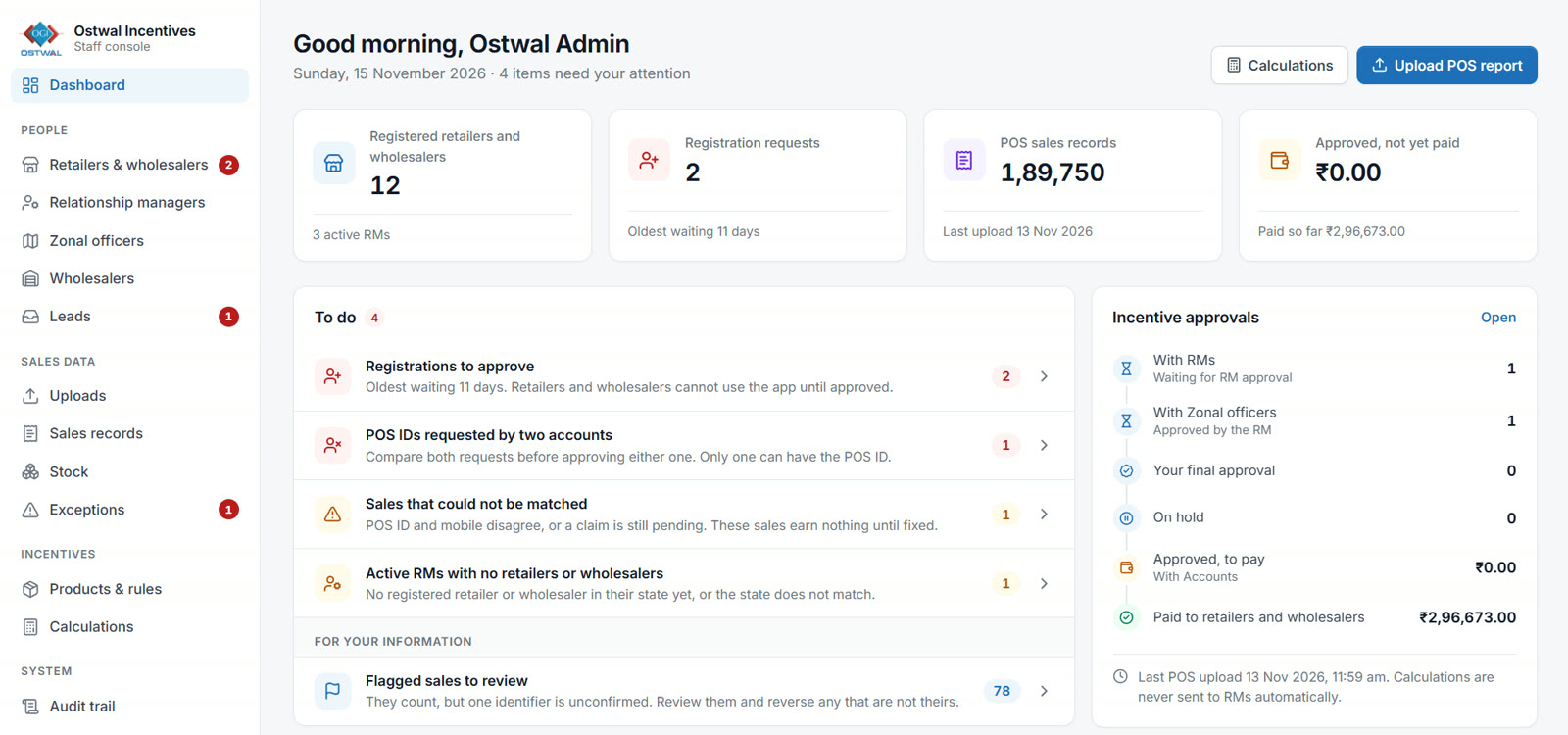
Step 5: Every rupee is traceable
Once approved, Accounts receives payment statements, records each payment with its proof, and the partner gets an SMS confirmation. In the app, partners see their own sales, incentives and payments live.
Around that core, stock syncs daily from SAP into a dashboard with ageing analysis, and bulk WhatsApp and SMS messaging through MSG91 keeps partners informed, with delivery reports for every recipient. A complete audit trail records every change, so any payout can be traced back to the sale, the scheme and the approval behind it.
How AIDLC made 22 days safe
AIDLC, our AI-Driven Development Life Cycle, isn't "let the AI write code". It changes who does what at every stage:
- Intent first, code second A plain-language build brief, with every open question logged as a numbered decision. The client decided the rules; the decision log became the single source of truth.
- One contract, shared everywhere Rules such as what a valid PAN or a scheme slab looks like were defined once and shared by the app, the website and the backend.
- AI builds, humans steer AI agents designed schemas, wrote services and screens, and built tests. Where data, money or production were involved, an engineer approved first.
- Tests are the accelerator Every feature shipped with end-to-end tests, so a change on day 20 couldn't quietly break something from day 5.
Requirements changed daily, as they always do: make bank details optional, keep retailer and wholesaler accounts separate, limit the app to Hindi and English. A change request often went from conversation to a tested, deployed feature on the same day.
Speed came from removing waiting, not from cutting corners.
What this means for your next platform
AI won't replace engineering teams. But teams that rethink their delivery around AI will deliver in weeks what used to take quarters, with better tests and documentation than before. Business rules, data privacy, security and production changes stay human decisions.
Every project has its own scope and complexity, so timelines will differ. If you're planning a platform that "will take six months", it may be worth a conversation. You can also see the full Incentive Platform case study.
Planning your next platform? Talk to us about your requirements and the right delivery approach.
Connect with Impetus
Impetus is a pioneer in AI and ML, specializing in developing cutting-edge solutions that drive innovation and efficiency. Our expertise extends to product engineering, warranty management, and building robust cloud infrastructures.